Vitality Member Platform | Health Pathways | 2023-present
Redesigning Vitality Member Experience
Timeline
2023 - Present
Team
Lead Designer + Cross-functional
Impact
2.3x engagement lift
Scale
42M members
Problem
The Vitality app had the right features but they existed as isolated fragments. Without connected journeys, members couldn't see how actions led to outcomes, resulting in low engagement.
My Role
Lead Product Designer for Health Pathways over 12 months. I led discovery research, designed the system architecture, and shipped the Sleep pathway pilot with cross-functional teams.
at a glance
Scaling Personalized Health to 42 Million Members
When I joined Vitality, the app had all the right pieces but they lived in silos. Goals, activities, education, and rewards were disconnected, so members couldn’t see how actions led to outcomes, resulting in low engagement and limited behavior change.
Isolated feature silos
Goals, activities, resources, and rewards lived in separate sections. Members navigated between disconnected experiences with no unified journey.
No guidance on what to do next
Members were left to figure out their own health journey. Without clear paths, most defaulted to the easiest actions rather than impactful behavior changes.
Member journey overview
Impact
Engagement that serves health.
By connecting existing features rather than building new ones, we launched 4 health pathways with minimal new development. The same components that powered isolated features now drive comprehensive health journeys.
What I owned and delivered
- –Led the discovery that connected existing app features (profiles, goals, activities, resources, rewards) into unified health pathways
- –Designed the pathway architecture that orchestrates fragmented features into guided journeys, enabling 80% component reuse
- –Created AI personalization that recommends pathways based on member profiles, achieving 74% 8-week retention (vs 58% baseline)
Loading interactive component...
Discovery
Members are doing the work we should design.
I led a discovery process analyzing 18 months of drop-off data and conducting interviews with 40 members. Working with our behavioral science team, we identified why isolated features weren't driving behavior change.
The data revealed members spent 74% of session time navigating between sections, manually connecting their sleep data to activity goals to rewards. I realized they were doing the integration work we should have designed for them.
Key insights that shaped the solution
Members aren't integration engineers
They shouldn't have to manually connect features. The system should create the journey for them.
Context matters more than customization
A night shift worker needs different sleep guidance than a new parent. Life circumstances drive behavior.
Progress without context creates anxiety
Seeing 'poor sleep' data without understanding why or what to do next makes members feel overwhelmed.
Recommended Priority cards
Solution
A platform architecture that connects features into guided journeys.
Health Pathways is a templating system with 6 reusable components—Goals, Tracking, AI Personalization, Devices, Resources, and Rewards—that can be configured for each health domain. This architecture enables 80% component reuse, reducing development time from 24 weeks to 6 weeks per pathway while maintaining consistent member experience.
Modular component library
6 reusable components power all pathways with configuration-based customization instead of custom builds.
Journey orchestration layer
Components are sequenced and connected based on health domain requirements and member context.
AI-driven personalization
Member profiles inform pathway recommendations, goal calibration, and content relevance across all journeys.
SHARED COMPONENT LIBRARY
Modular Platform DesignHealth Pathways
The same components configured differently create unique experiences across pathways.
SYSTEM BENEFITS
Loading interactive component...
Case
Sleep Pathways
I designed the Sleep pathway as our pilot, connecting existing features—tracking, goals, content, and rewards—into a guided journey. Working with engineering, we launched an 8-week pilot. I designed each stage to reduce friction while maintaining motivation through immediate feedback and meaningful rewards.
Loading interactive component...
Scroll to see the complete 5-screen member flow
Discovery
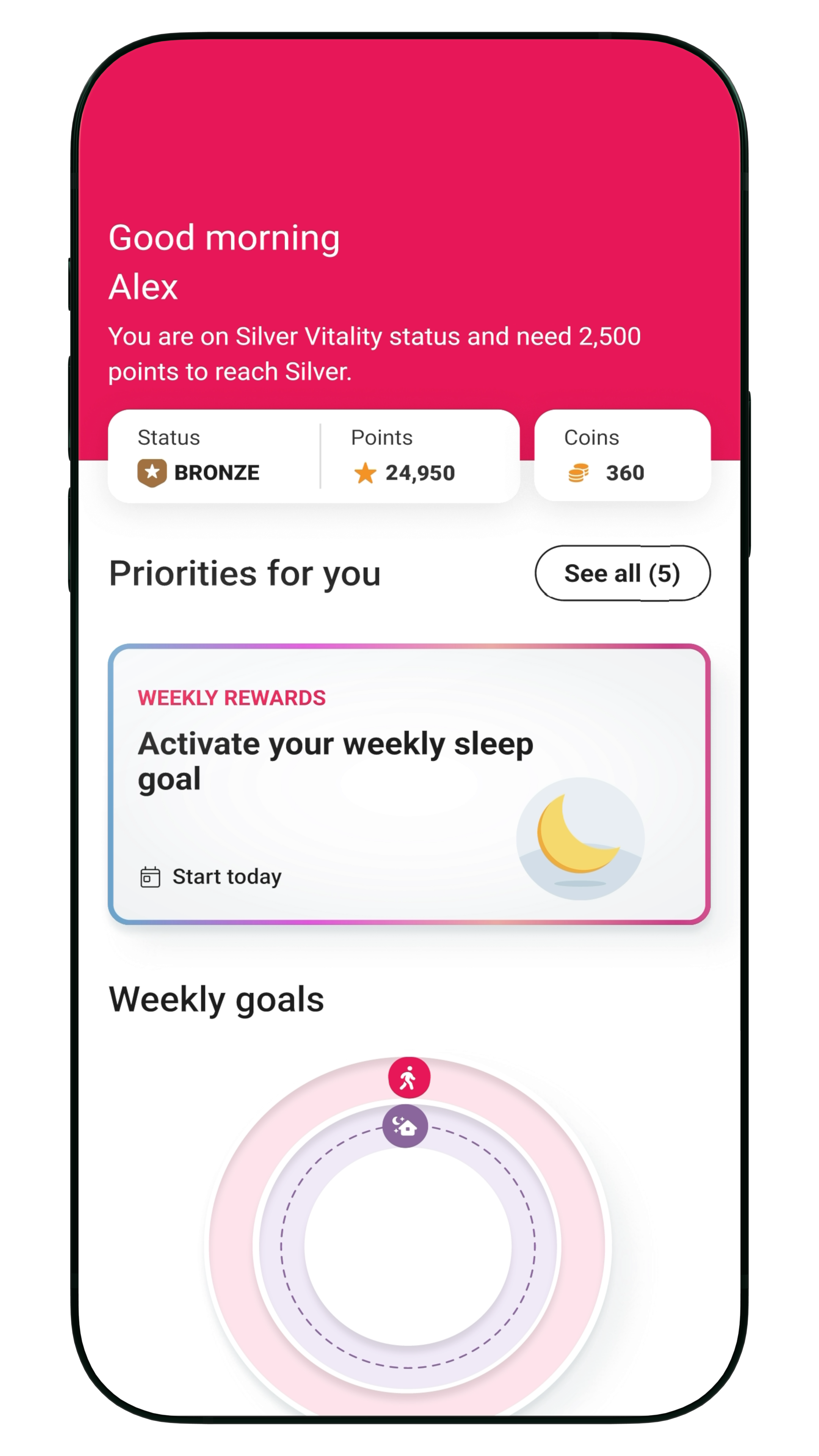
Weekly sleep goal appears in priorities
Enrollment
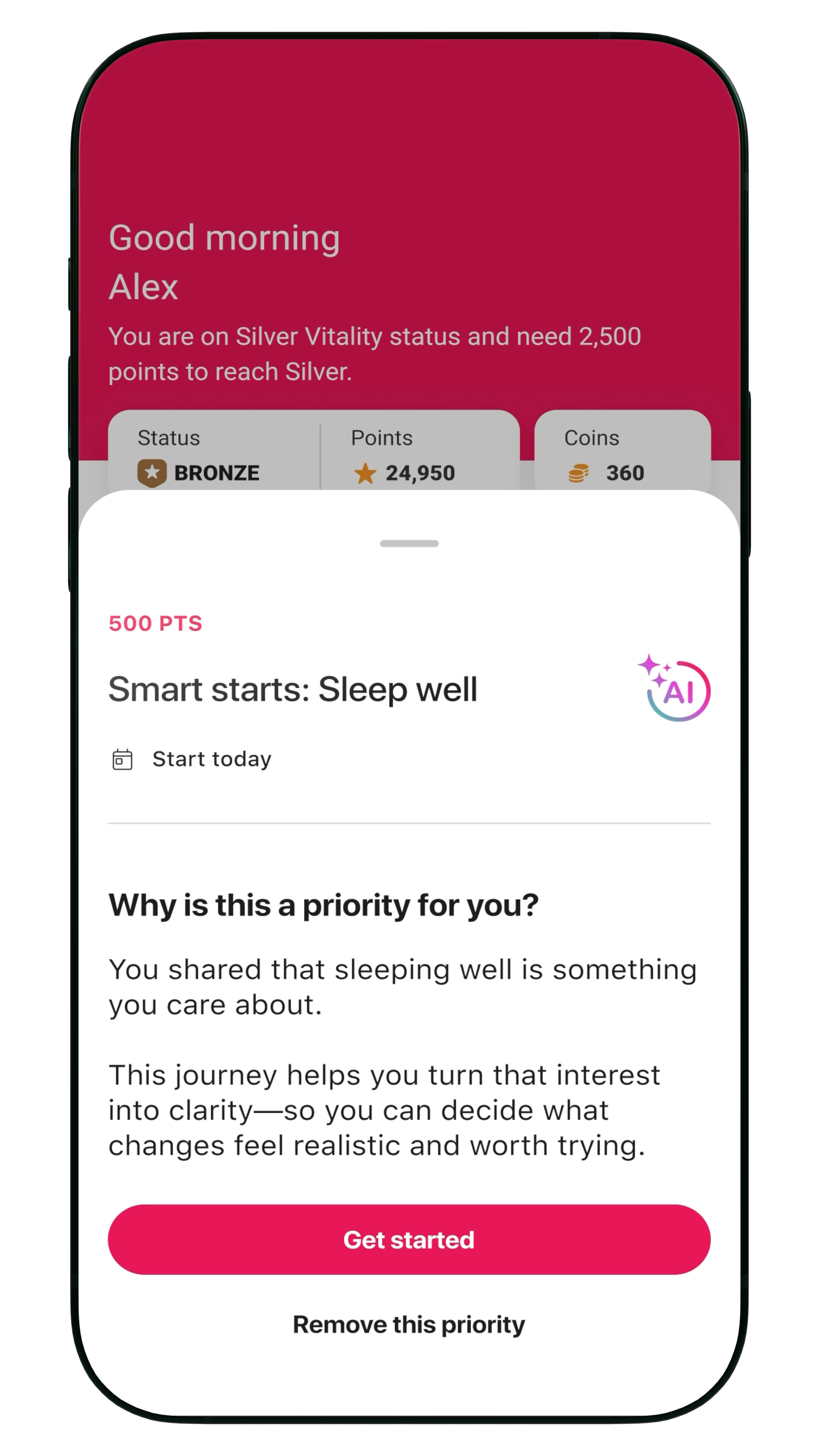
AI explains personalized reasoning and benefits
Goal Setup
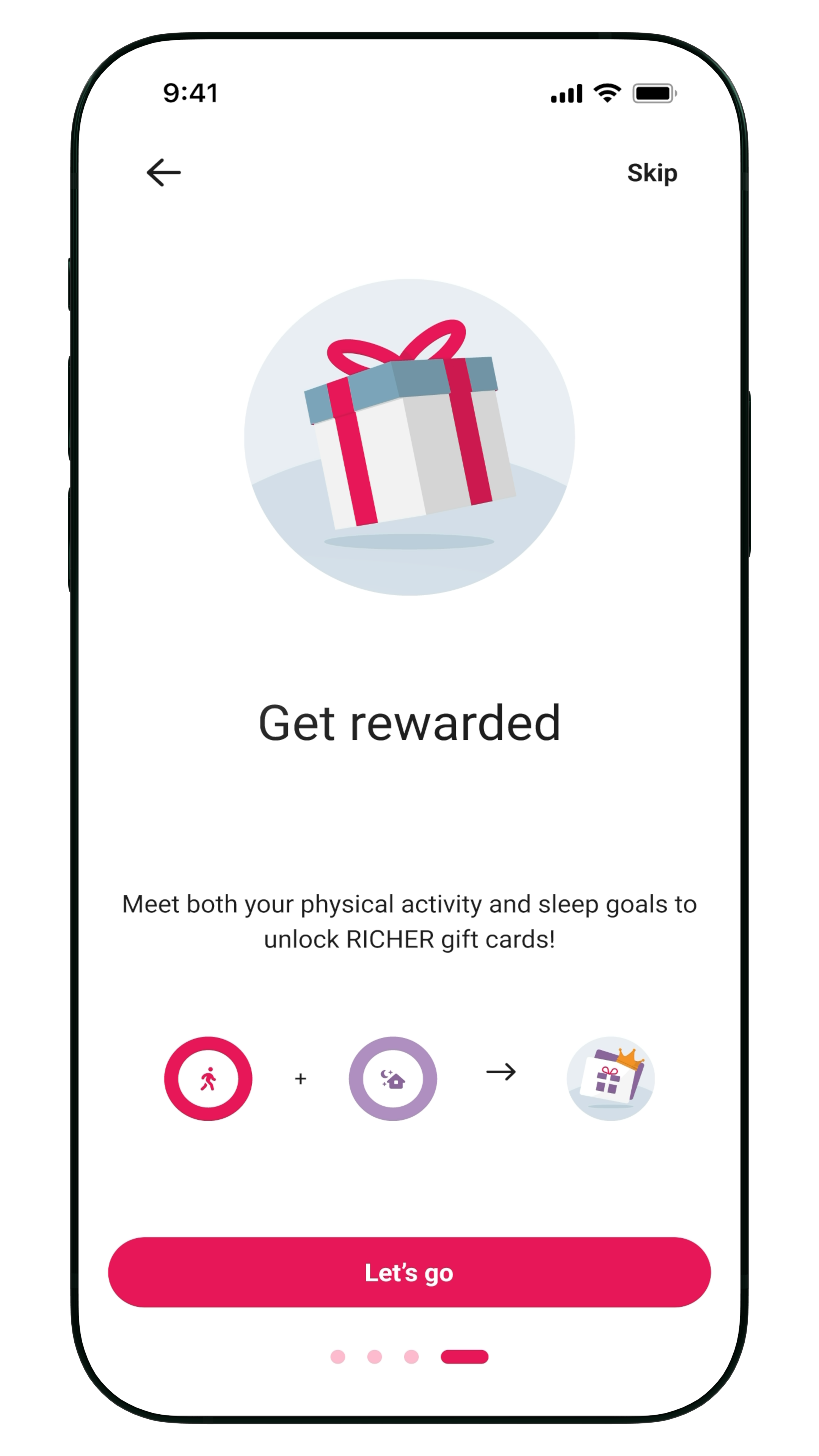
Onboarding explains multi-goal rewards system
Tracking
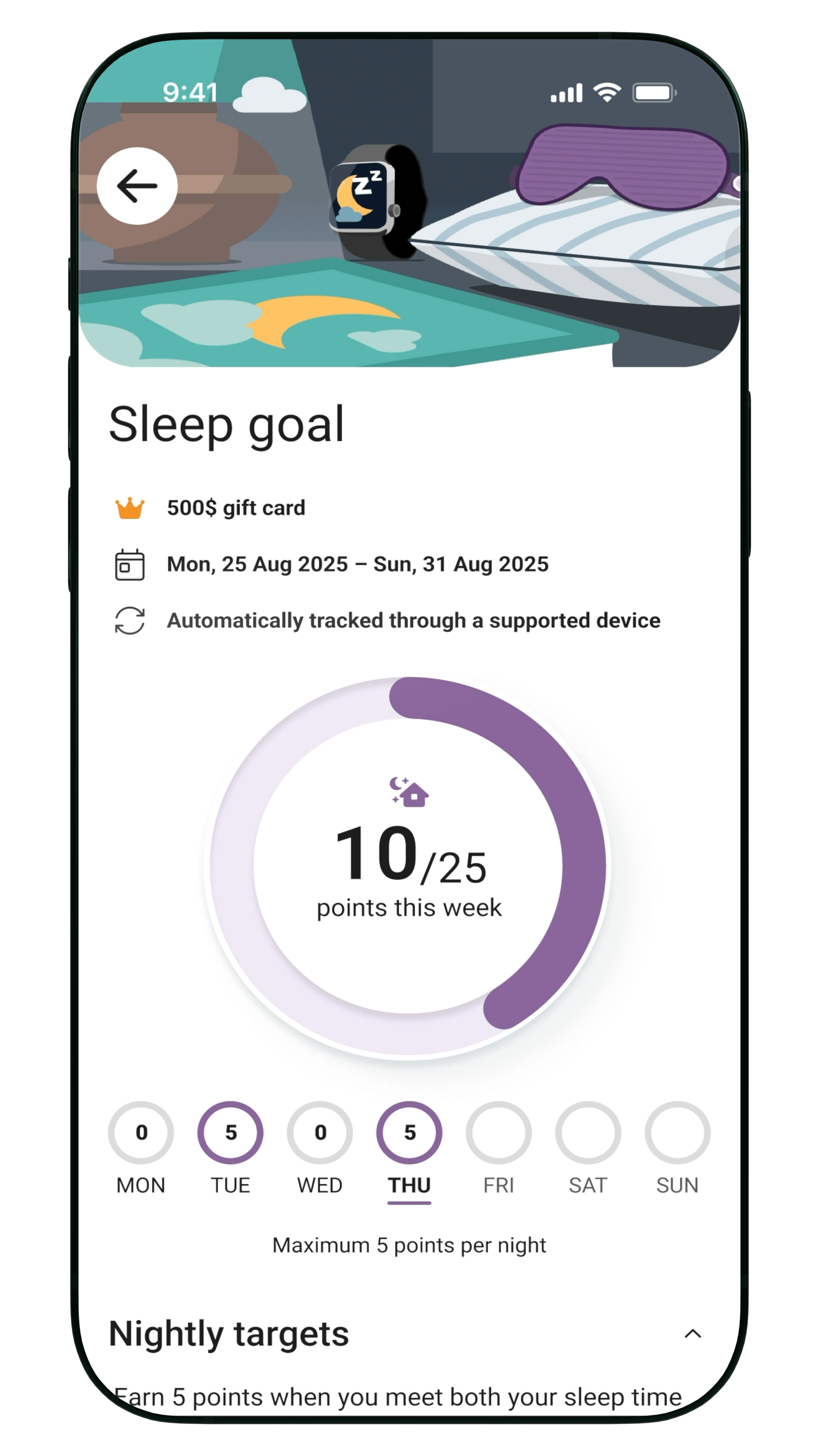
Daily progress tracked with neomorphic ring
Rewards
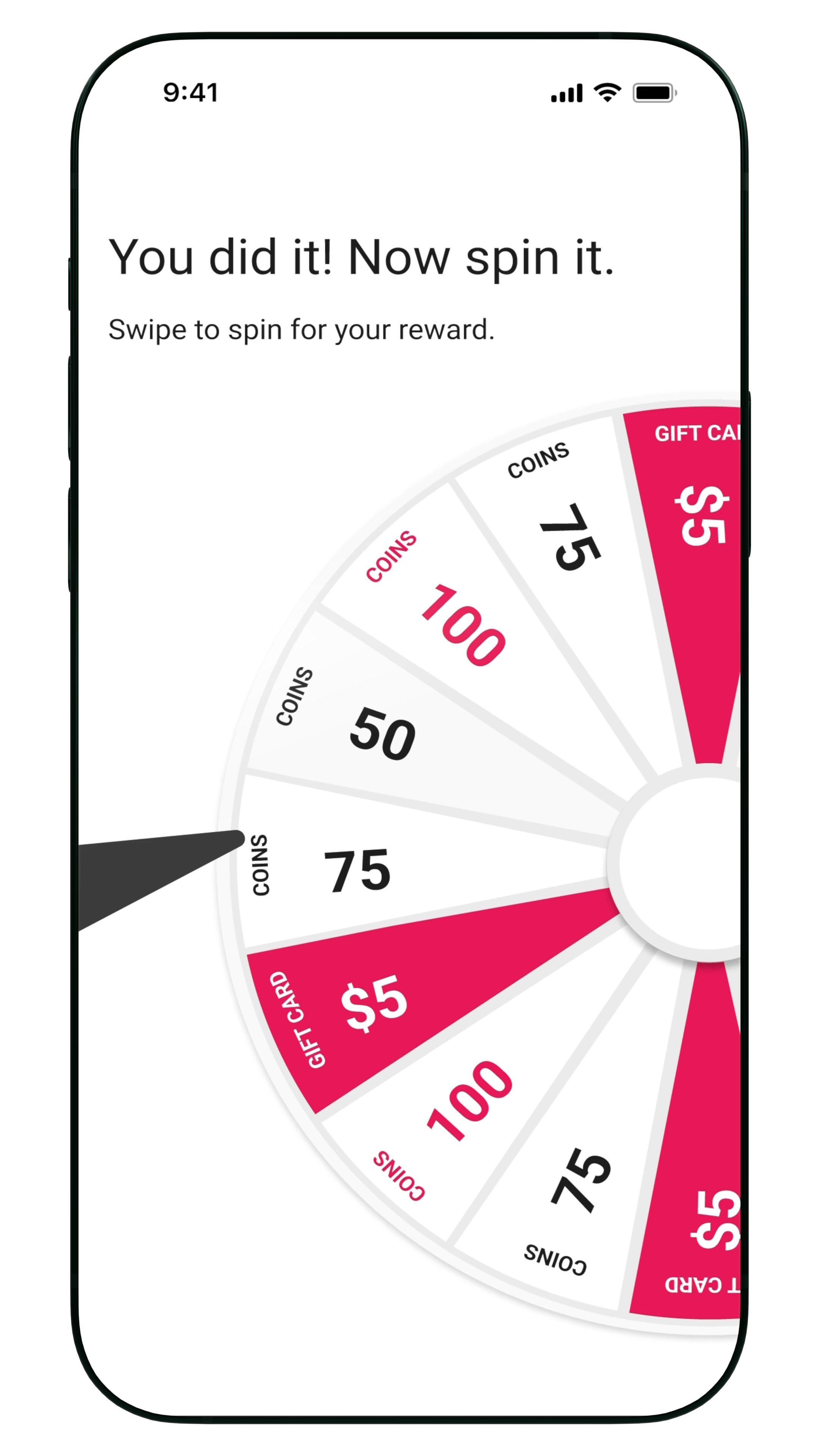
Goal completion unlocks gamified reward spin
AI Personalization
Tailored priorities in real-time.
Members complete a brief assessment and watch AI analyze their responses to generate tailored priorities in real-time.
Complete the assessment
Sleep Health Assessment
On average, how many hours of sleep do you get per night?
Include time spent asleep, not just time in bed.
Progress Tracking
Weekly targets with automatic device tracking.
Weekly targets combine duration and consistency goals, automatically tracked through connected devices. The Super Wheel bonus creates motivation to optimize both sleep and activity.
Explore weekly targets
Weekly targets
Mon, Aug 25 – Sun, Aug 31
Device Integration
Seamless wearable connectivity.
Connect Apple Watch, Fitbit, Oura Ring, and other wearables to automatically sync sleep and activity data. Manual entry remains available as a fallback.
Select device
Connected Devices
Automatic health data sync
No device?
Manual entry always available
Tap Apple Watch to view synced data
Rewards & Incentives
Real rewards for health progress.
Incentive plans offer tangible rewards like insurance premium credits and gift cards. Each plan shows clear deadlines and completion requirements, turning health goals into concrete financial benefits.
Explore the incentive structure
Loading interactive component...
Trade-offs
Navigating tensions through feedback.
Key tensions I navigated through research, prototyping, and member feedback.
Strategic Simplification
What we reduced to enable scale
7-screen onboarding → 3 screens
Moved sleep science education to contextual tooltips. Prioritized activation over upfront education. Completion rate: 34% → 68%.
Custom dashboards → Unified progress pattern
Initially each pathway had unique tracking UI. We standardized to a shared progress component that adapts to different metrics, enabling 80% code reuse.
Competitive streaks → Encouragement-focused
Removed loss-aversion language. Accepted 12% fewer daily check-ins in exchange for members feeling "supported" vs. "pressured."
Next Phase
Evolving beyond rules to intelligence.
The current rule-based system works well, but member feedback pointed to specific gaps. I proposed three enhancements that are now in development with our data science team, scheduled for Q2 2026.
Current State
Targets adjust weekly based on 7-day rolling average with fixed ±15 min increments
In Development (Q2 2026)
ML model uses calendar, activity, and historical patterns to suggest optimal bedtimes
Target Experience
"Based on your 6am flight tomorrow, consider sleeping 45 min earlier tonight"
Device connectivity flow
What I Learned
The hardest problems aren't about interfaces.
This project taught me that the hardest design problems aren't about interfaces. They're about managing change under constraints and building systems that scale beyond your immediate team.
Key Takeaway
I learned to lead with data as leverage. The pilot metrics gave us evidence to push back when feature requests conflicted with member needs. "We measured this" was stronger than "we think this."
1. Start smaller
Designing for 42M members from day one created complexity. A focused pilot would have let us learn faster.
2. Build in longitudinal research
Sleep behavior changes slowly. Our 8-month timeline captured engagement but not long-term habit formation.
3. Partner earlier
We brought in behavioral scientists mid-project. Having that perspective from the start would have shaped better research questions.